I take to the open road, healthy, free, the world before me……. Walt Whitman

Travel is my new normal. The edge of my comfort zone has been pushed by the experiences I have had and the information I have heard.

The Nuffield Farming Japan group travelled from Indonesia this week to Japan and I have been reflecting on my UK centric view of the world. Indonesia was not a country I associated with positive news, but spending time there enabled me to see that they have an economy in growth (approximately 20%) and good trade links with the region. The country is pushing for 100% self sufficiency in key crops but having already achieved 95% supply for rice and with good production in other crops they are doing better than Japan. Indonesia’s population is young with 60% of people being under 30. In contrast, Japan has an ageing population and an economic growth of less than 2%. Both countries are seeing a reduction in the number of young people wanting to work in food and agriculture but with the average age of farmers in Japan already at 65, there is not much time to change the situation without changing the strict immigration laws applying to low skilled workers.

The application of technology in agriculture has been embraced by both countries to entice young people from city desk jobs and into food production.

In Japan, we visited Spread, a company who has the largest lettuce factory in the region producing 21,000 heads at 100g each day.

OneNote_20170519_1495170670550

OneNote_20170519_1495170810268

The technology used for the vertical farming system employs the use of Internet of things (IOT), automated racking to move the crop, controlled atmosphere and water management systems. Factory production in a sealed production hall means that pest and diseases are kept out. There is no need for pesticides and water is applied at the required quantity, meaning there is no wastage. The unit runs with few people meaning that it is labour efficient, however, the electricity is 30% of the input cost and the waste product (roots and leaves) account for 20% of production volume.

Modern greenhouses in the UK and Holland for example, have historically made their own electicity by burning gas or wood to heat a water boiler and subsequently produce steam to drive a generator. The carbon dioxide by-product is fed into the greenhouse to supply the crop.  Waste plant material can also be fed to animals or used to fuel an anaerobic digestion plant.

Interestingly, Spread is not using an alternative energy option or waste optimisation but still has to supply carbon dioxide to the greenhouse.

Comparing this business model to Great Giant Pineapple in Indonesia who use the waste plant material from the pineapple and sugar cane plantations to feed their cattle then use the cattle manure for compost to fertilise the soil, the Spread model looks incomplete.

Each country has its challenges and it will be interesting to see what systems are used to ensure increased food production,  maintainence or improvement of efficiency and sustainability.

The Japan trip continues to Hokkaido and Tokyo……

People don’t take trips, trips take people……..John Steinbeck

In a country of 260 million people, 35 ethnicities, several religions and over 300 languages, the Indonesian crest ‘Unity in Diversity’ is very apt.

OneNote_20170515_1494826470914.jpg

Tipped to become a top 10 economy in the next few years, Indonesia was an amazing place to discover agriculture, food production and marketing in the ASEAN region.

I was extremely happy that the our ‘orientation’ consisted of a quick trip to the city museum and the then an extensive tour of a range of supermarkets covering top tier to bottom tier.

DSC_0309

DSC_0312

Day two and three were spent visiting businesses, the first, Jyuan Jaya  focusing on importing cattle from Australia and fattening them up in a feedlot for slaughter over a 120 day period. A certification scheme was brought in by the Australian government after an Indonesian slaughter house was exposed for bad practice. The scheme included a traceability system which only addresses the identication of the slaughter house and in my opinion missed a great opportunity to establish a system to trace the animal from birth through the supply chain which would be useful to all parties.

You can see my interview on this subject  with Mick Sheehy, 1993 Nuffield Farming scholar who hosted us in Indonesia.

Mick Sheehy intervie

The agri-business owned by the Husudo Angkosubroto listed in the Forbes 50 rich list, incorporated fruit production, crop production, cattle feed lot, cattle breeding,  research and development  and production of Bromelain enzyme for use in medical products such as treatment for HIV. These unique businesses are all efficiently linked together as the waste material from cassava, pineapples is used for both composition which goes back onto the land used for growing pineapples or into cattle feed. The Bromelain enzyme is extracted from the pineapples and the site has it’s own energy plant to run the pineapple canning factory and sugar cane factory. Electricity supply is a challenge as the National grid manages the power by load shedding so in Lampung where GGP is based, power goes off every Wednesday. Inside the pineapple plant, pineapple slices are canned once the skin has been stripped off and any broken slices go into the tit-bits or crushed pineapple orders.

The company focuses it’s pineapple production on the B2B canned market, supplying own label to supermarkets worldwide and to restaurant chains. Every 5th can of pineapple in the world is made by them.

Until this week, Indonesia was a country I knew only through a trip to Bali three years ago. This trip to Jakarta and Lampung has been enlightening and has vastly increased my knowledge of a country that is a major player not only in the ASEAN region but worldwide.


The only source of knowledge is experience…..

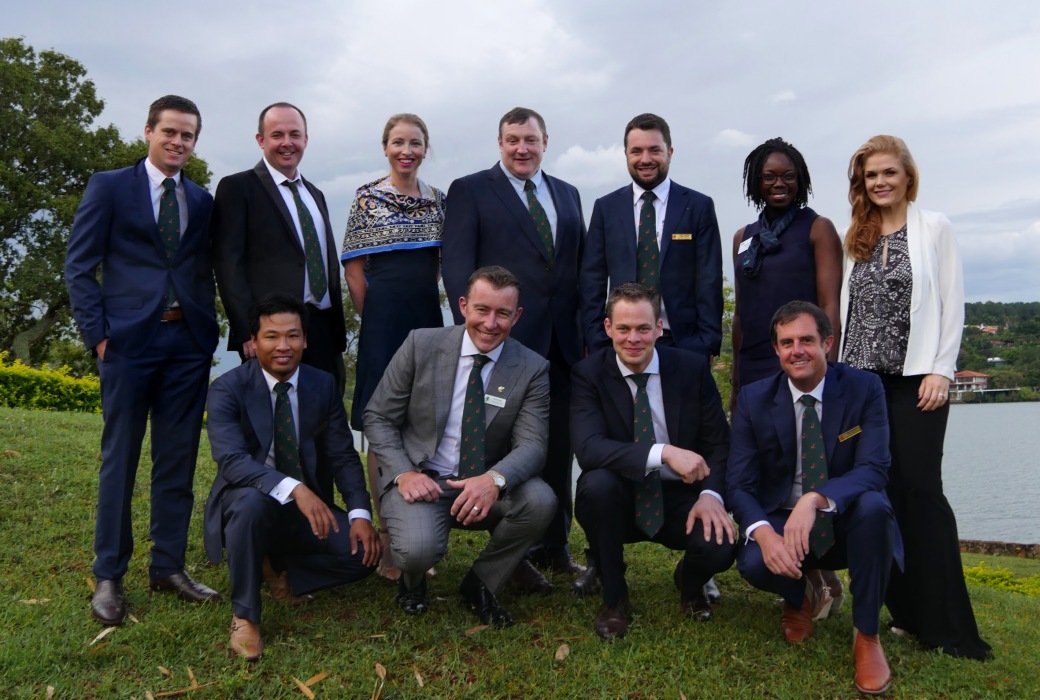
The first leg for the Nuffield Farming trip to Japan was Singapore. The UK scholars touched down in Chiang airport and caught up with colleagues from Canada, Netherlands, New Zealand, Brazil and Australia.

DSC_0233

Day one was an opportunity to build on work we had done at the conference in Brasilia on personality, stress and team work. My take home message from this was that having a strategy for managing life events is key to a quick recovery when things go wrong.

Day two focused on Singapore’s place in the ASEAN economy. The country is integral to providing a link between businesses in countries such as Australia who want to trade in the region. Their list of trade deals around the world is impressive and no doubt they will be looking to establish a deal with the UK in future. One of the international businesses based there is the credit risk insurer NCI trade solutions. The CEO explained to us how they facilitate trade between countries such as China and Brazil by provided credit insurance for the seller.

My primary focus as I go round the different countries is to look at the good supply chain and nutrition but my take home message from day 2 is to look wider than my subject area.

Day three was spent at the Syngenta office for APAC (Asian Pacific Countries).
It was interesting to compare the strategies for Europe and APAC as the customers have fundamentally different needs. There are 450 million APAC growers who are generally rural, small scale and do not have a lot of knowledge or finance. Syngenta focuses it’s Good Growth Plan programme on food waste, biodiversity and health. In Europe food waste at the farm level is lower than it is in the APAC countries and there are systems and technology in place to keep losses to a minimum, environmental policies exist in various forms to protect the land and users of chemical plant protection products undergo certified training. The same systems are not in place in APAC and is where Syngenta can add value.

The time in Singapore passed very quickly but we managed to make time to explore in the evenings and the highlight for me was the Garden City at night.

f5664421-c780-4563-97c1-daf33a938013_large_image
We have moved onto Indonesia for 5 days but the experience of being in Singapore has been enriching as well as building on my knowledge of ASEAN.

Countdown to Nuffield Global Focus Programme 2017

In May and June this year I will be travelling in a group of eleven people from the U.K, Ireland, The Netherlands, Australia, New Zealand and Brazil as part of the Nuffield Global Focus Programme. The GFP is set up to give the group exposure to global food production. We will visit Singapore, Indonesia, Japan, Israel, U.K and USA flying from country to country and driving round the various locations

So Why a GFP?

It is a learning experience and a great opportunity to meet food policy makers, see food markets, visit food producers and of course to meet the people from the various countries.


There are parts of the itinerary that are highlights before I have even travelled. The trip to Washington D.C where we will visit the US Department of Agriculture (USDA) and the trip to Japan mainly because it is a lifelong ambition and a food discovery trip rolled into one.

I have been to all the locations before except Singapore and Japan, so the challenge will be to keep an open mind and view them through a fresh pair of eyes.

Japan GFP

Group travel is not something I have done for years so I am looking forward to getting to know my fellow travellers and making new lifelong friends.

It is a huge undertaking, I’ll spend time away from a flourishing food consultancy business but I will come back with new insights which I am excited to share.

Commitment, communication and co-operation

I attended the Rothamsted Open Innovation Forum (ROIF 2017) last week and I was intrigued to hear Matthew Ryan from CABI explain to the audience that commitment, communication and co-operation are 3 key things he needed to bring the right people together to work on the plant microbiome project. He then invited us to join a discussion group on how to make the project happen.

The plant microbiome is the environment around the plant containing fungi, bacteria and yeasts that help to provide nutrients, fight disease and pests and support the plant’s growth.

plant

His challenge is that the study of the plant microbiome is a multi-disciplinary task involving plant pathologists, microbiologists, crop scientists, data analysts and many others. In fact, to map the microbiome of plants is even a bigger task than mapping the human genome because of the different species and environments involved. In addition, the environments in which plants live, are constantly changing so it is a task similar to the one faced by the Forth Road bridge painters, before a sustainable solution was found!

So why would I, a technical and nutrition consultant working in the food industry, want to take part in this discussion?

Three words – commitment, communication and co-operation. In any discipline, these three elements make challenges possible to overcome.

One of the key questions in my Nuffield project is “how do nutritionists, farmers and food manufacturers work together to bring improvements to human nutrition?”

So far, I have come across products that deliver nutritional benefits such as vitamin D enriched mushrooms, selenium enriched tomatoes, Omega 3 enriched eggs, high beta-carotene sweet potatoes and A2 milk. Projects do exist that bring the different specialists together but is this a subject area too important to be left to private and commercial initiatives?

In the UK, food and nutrition policy is handled by the Food Standards Agency and Defra. The Department of Health also has a role in food policy and has the Public Health England (PHE) agency focusing on nutrition. PHE is committed to advising and supporting on key areas for example, sugar reduction and producing the Eatwell Guide. SACN (Scientific Advisory Committee on Nutrition), advises PHE and other government institutions on nutrition and related health matters.

The multi-agency approach is well established but could we be doing better to commit to working across the various disciplines, communicating nutritional health priorities and co-operating on projects to improve the nutritional value of food in the U.K?

When in Rome….


I took advantage of a business trip to a North Carolina sweet potato grower in December 2016  and spent my free time visiting the local supermarket to have a look at the range of vegetable products.  I am particularly interested in the health claims and nutritional labelling that is used in the US.

I had the opportunity to discuss the benefits of eating orange flesh sweet potato which has a high beta-carotene content. There is interest in improving the nutrient density of crops for the benefit of consumers and I want to find out how nutritionists and growers are working together to achieve this.

My hosts were kind enough to take me out lunch where I was able to enjoy the traditional North Carolina barbeque chicken and Brunswick stew, I declined the deep fried oysters…..

Take a look at my vlog to for a snapshot of my trip..


Barbara Bray Nuffield study vlog Dec 2016


My first Nuffield blog

Potato pic.png

cornish-seaberry-3
Eating Cornish Seaberry sorbet at the conference dinner

The 2016 Nuffield Farming conference, held in Newcastle, was truly a great event.

The newly elected scholars for 2017 attended a ‘briefing’ the day before the conference, to get acquainted with the Nuffield family, project guidelines and to let reality sink in.

Nuffield Farming scholarships are awarded to people wanting to take a step out of their day to-day work in the food, farming and rural industries, to travel and study a subject of interest.

I had read various projects over the years and found them innovative and interesting but it was only this year that I felt the timing was right both personally and professionally for me to pursue my topic ‘Vegetable production for specific nutritional need’.

There is a great deal of focus on public health nutrition at the moment and debates on obesity, sugar and fat seem to be continuous. The focus on vegetables has not translated into higher consumption of them and the health of the nation continues to decline.

Where are farmers and food processors in these debates? Nutrition scientists are quick to point out national vitamin D deficiency, a lack of fibre consumption and low selenium in our foods but are these messages being incorporated into the decisions made about choice of variety in the fields and choice of ingredients in recipe dishes?

One area I want to look at more closely, is the level of potassium especially in potato products. People with chronic kidney disease have to limit their potassium intake and avoid potato based foods, whereas people with heart problems need to ensure that they have a good intake of potassium. So why don’t we label food products with the level of potassium?

So many questions, I guess now it’s time I went in search for some answers.

Now I wonder who I can speak with to get an appointment with Marion Nestle………..